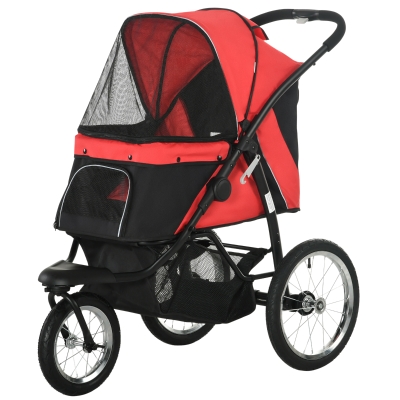
A pet stroller needs to work in several places: with your pet inside, along the route you plan to take, and wherever you store it afterwards. Compare each of those situations before deciding that a large cabin or a compact fold is the feature that matters most.
Check cabin measurements and rated load together
Compare the listed interior dimensions with your pet sitting or resting in the position relevant to the outing. Check the entrance and any model-specific capacity conditions. A stroller rated for a particular weight is not automatically spacious enough for every pet of that weight.
Measure the storage opening
Use the folded dimensions to check your cupboard or car trunk, including the opening that the stroller must pass through. Check the product’s own weight separately. Folding changes the space it occupies, not the amount you have to lift.
Read the setup and restraint instructions
Before introducing your pet, follow the assembly instructions and check the latches, wheels and parking brake described for that model. Read the supplied restraint guidance and verify that the enclosure closes as intended. Do not improvise a different attachment method.
Some models have detachable cabins, baskets or other components. Confirm what is included and how each part locks in place; similar-looking strollers can have different setup steps.
Plan around the stated use
Wheel size and a canopy do not by themselves establish all-terrain performance or weather protection. Check the intended surfaces and limitations in the instructions. Start with a short, familiar outing so you can assess the practical handling and your pet’s comfort.
Keep the routine manageable
Look for the specific fabric and cleaning instructions, and leave time to dry components before storage when needed. Inspect moving parts according to the manual rather than waiting for a problem during a trip.
Browse the foldable stroller collection, then compare individual cabin, entry and storage measurements on the product pages.